Mardi Himal
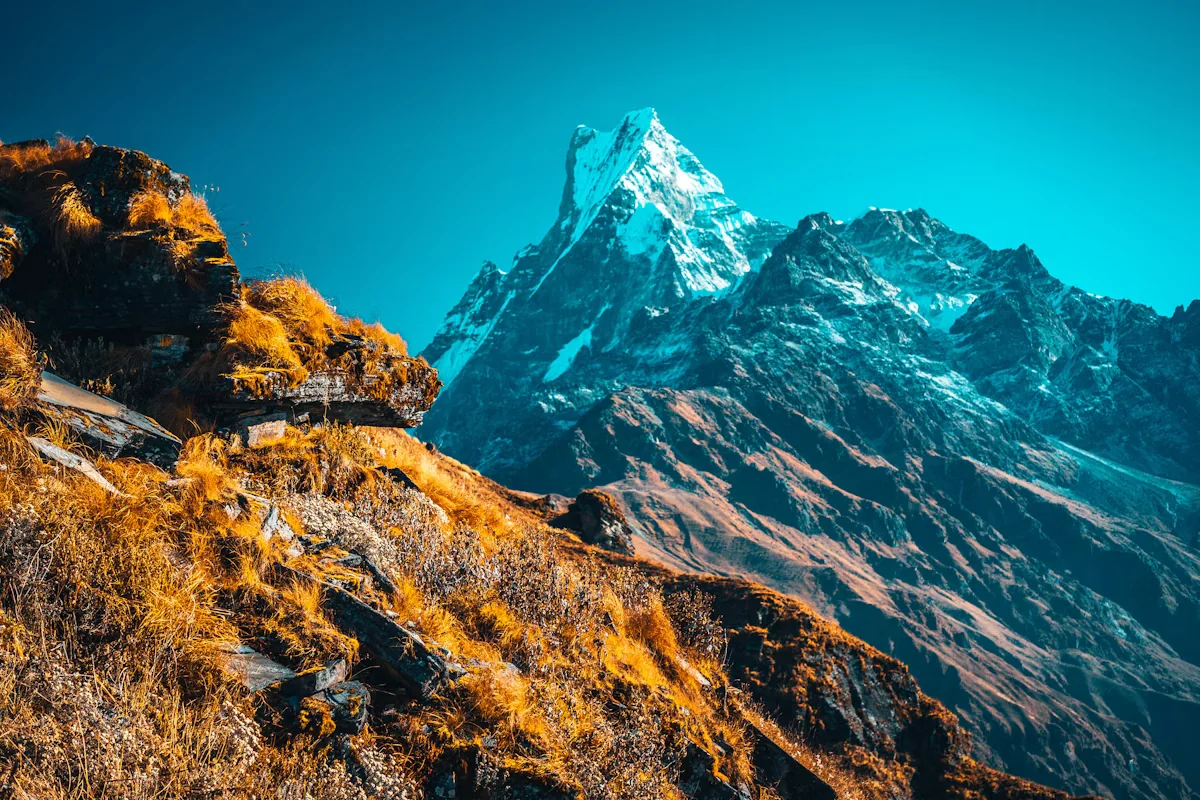
The Mardi Himal trek follows a ridge line east of the Annapurna sanctuary, offering intimate views of Machhapuchhre and the Annapurna range from a quieter trail than the main ABC route. This guide covers route structure, practical logistics, and the decisions that matter before you go.
Detailed figures pending field verification
- Typical duration
- 5–6 days
- Difficulty
- Moderate
- Maximum altitude
- 4,500 m
- Starting point
- Kande
- Finishing point
- Siding
- Best seasons
- March–May, October–November
- Accommodation
- Teahouse lodges
- Guide considerations
- Licensed guide required
Route overview
The Mardi Himal trek climbs from lowland villages through forest and open ridge country toward the Mardi Himal viewpoint and high camp area. The trail character differs from the Modi Khola approach to ABC: more ridge walking, fewer trekkers on many sections, and close perspectives of Machhapuchhre.
Some trail sections are less developed than the main sanctuary route, with simpler teahouse infrastructure at higher elevations.
Detailed route description with key villages, elevation profile, ridge sections, and trail character will be added after field verification.
Itinerary structure
Most trekkers allow around five to seven days, depending on starting point, pace, and acclimatization needs. The exact day-by-day breakdown varies by whether you use Kande, Phedi, or other access points.
Suggested short, standard, and acclimatization-friendly itineraries will be added once verified with local guides.
Difficulty
Mardi Himal is generally rated moderate. Difficulty depends on daily distance, ridge exposure, weather, altitude at high camp, and the condition of less-developed trail sections, not just the headline difficulty label.
Detailed difficulty assessment covering distance, elevation profile, trail surfaces, and fitness requirements pending verification.
Altitude
Mardi Himal reaches significant elevation at the high camp and viewpoint, though typically lower than the ABC sanctuary floor. Acclimatization still matters, especially if you ascend quickly.
See Altitude and acclimatization.
Altitude profile and acclimatization recommendations pending verification.
Best time
Spring and autumn are the standard trekking windows. Ridge sections can be exposed to wind and cloud; visibility at the viewpoint varies by season and weather.
Season-by-season analysis pending field verification.
Accommodation
Teahouses exist along much of the route, though high camp and upper sections may have simpler lodge options than on the ABC trail. Room standards vary. Expect basic facilities at elevation.
Detailed accommodation expectations by section of trail pending verification.
Food
Menu variety generally decreases at higher elevations. Dal bhat remains the staple and best value. Plan for simpler options at high camp.
Typical menu items and route-specific food notes pending verification.
Costs
Mardi Himal is typically shorter than ABC or the Circuit, which can reduce total on-trail costs: though daily rates at higher lodges may still reflect transport difficulty.
Route-specific cost estimates pending verification.
Permits
Trekking in the Annapurna Conservation Area requires permits. Requirements and costs can change. Verify before travelling.
Current permit requirements and costs pending verification.
Guide considerations
Mardi Himal is on the list of Annapurna routes that require a licensed guide. The ridge is also quieter and less obvious than the main sanctuary trail, which is a separate reason to walk it with someone who knows the turns.
See Do you need a guide?.
Transport
Trailheads in the Pokhara region are typically reached by road from Pokhara. Common access points include Kande and Phedi: exact options pending verification.
Trailhead access options, journey times, and transport costs pending verification.
Packing considerations
Standard teahouse trekking gear applies, with layers for ridge wind and cold at high camp. Rain protection is essential in monsoon and shoulder seasons.
Common mistakes
Common errors include underestimating ridge exposure, ascending too quickly to high camp, and assuming teahouse availability matches the ABC trail.
First-hand common mistakes from guide reports pending collection during field research.
Alternatives
If this route does not fit your time, fitness, or interests, consider these other Annapurna treks.
Annapurna Base Camp
The classic sanctuary trek: higher altitude and the enclosed amphitheatre experience.
Ghorepani / Poon Hill
Accessible foothill circuit with famous sunrise panoramas.
Annapurna Circuit
Full massif circumnavigation: longer and more varied.
FAQ
How many days do I need for Mardi Himal?
Pending verification. typical durations are shorter than ABC but depend on trailhead, pace, and whether you include rest days.
Is Mardi Himal harder than Annapurna Base Camp?
Difficulty comparisons depend on itinerary, altitude, and trail conditions. Mardi Himal is generally shorter with strong ridge walking, but some sections are less developed than the main ABC trail.
Do I need a guide for Mardi Himal?
Yes. Mardi Himal is on the Nepal Tourism Board list of Annapurna routes that require a licensed guide, arranged through a registered agency.
How does Mardi Himal compare for crowds?
Mardi Himal is generally quieter than ABC and Poon Hill, though exact crowd levels vary by season and section. Pending verification with current trail conditions.
What is the highest point on the Mardi Himal trek?
Pending verification. maximum altitude will be confirmed with verified elevation data.
Planning the Mardi Himal trek with a guide?
Tell us about your dates, experience, and preferences: we will help you find a suitable local guide through our network.
Request a Guide