Nar Phu Valley
Nar Phu Valley is a restricted area north of the Annapurna Circuit. The usual walk leaves the main trail at Koto, passes through Meta to the villages of Phu and Nar, and crosses Kang La back toward the Circuit near Ngawal. It is remote, culturally distinct from the teahouse highway, and a serious altitude commitment. This guide covers how the valley fits a Circuit plan, and the permit and acclimatization decisions to settle first.
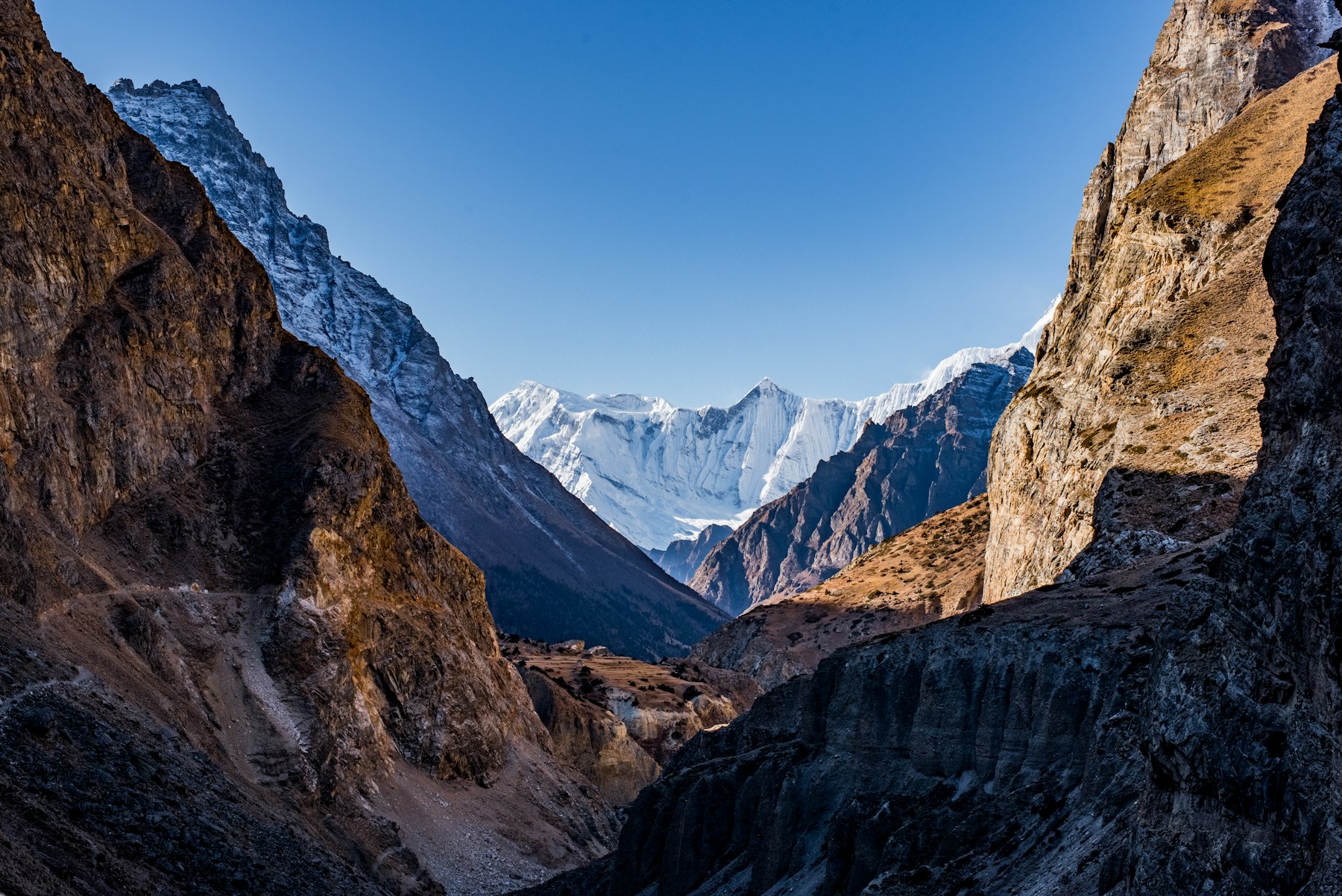
Detailed figures pending field verification
- Typical duration
- 7–10 days
- Difficulty
- Challenging
- Maximum altitude
- 5,320 m
- Starting point
- Koto
- Finishing point
- Ngawal
- Best seasons
- March–May, October–November
- Accommodation
- Basic lodges; limited beds
- Guide considerations
- Licensed guide required
Route overview
Nar Phu Valley runs north of the Marsyangdi, off the Annapurna Circuit. Trekkers usually leave the main trail at Koto, climb into a narrower valley through Meta, and continue to Phu, the more remote of the two villages. The route then crosses to Nar and, on the classic finish, over Kang La to rejoin the Circuit near Ngawal.
The landscape turns drier and the villages feel closer to upper Mustang than to the teahouse trail you left at Koto. Lodges are fewer, days are quieter, and the pass is the piece you cannot treat as optional if it is your way back.
Detailed route description with villages, the current trail from Koto, Kang La conditions, and where the route rejoins the Circuit will be added after field verification.
Itinerary structure
Plan the valley as its own block of days, then add the Circuit stages before Koto and after Ngawal. Acclimatization has to happen inside this quieter valley, not only in Manang, because Kang La comes before you rejoin the main trail.
A full Circuit plus Nar Phu is a long trek. Shortening the road sections of the Circuit does not remove the need for rest days before the pass.
Suggested valley itineraries, including rest days before Kang La and combinations with the Circuit, will be added once verified with local guides.
Difficulty
Nar Phu is challenging. The walking is not only the pass: several days of rough trail, basic lodging, and cold nights come first. Remoteness is part of the difficulty. Help, spare beds, and route choices are thinner than on the Circuit.
Prior high-altitude experience is a fair expectation. This is a poor first Himalayan trek.
Detailed difficulty assessment covering daily distance, pass conditions, and fitness requirements pending verification.
Altitude
Kang La is among the highest points trekkers cross in the Annapurna region, in the same class of commitment as Thorong La. The villages of Nar and Phu are already high. Ascending the valley too quickly, then attempting the pass because the itinerary says so, is how this route goes wrong.
See Altitude and acclimatization before you add these days.
Sleeping elevations, Kang La altitude, and a conservative acclimatization schedule pending verification.
Best time
Spring and autumn are the realistic seasons for Kang La. Winter snow can close the pass. Monsoon complicates the lower Marsyangdi approach and the trail into the valley. Even in peak season, a spare day for weather belongs in the plan.
Season-by-season notes for Kang La and village access pending field verification.
Accommodation
Expect basic lodges rather than the Circuit’s menu of teahouses. Beds are limited in Phu, Nar, and the stops between. Camping is part of some itineraries where lodges do not cover the night you need.
Lodge availability by village, and where groups camp, pending verification.
Food
Meals are simple once you leave Koto. Dal bhat is the reliable choice. Choice and resupply are poorer than in Manang or Chame, so do not plan on buying gear or much variety in Phu.
Route-specific food notes pending verification.
Costs
Nar Phu costs more than a standard Circuit week. Restricted-area permit fees, required staff if the rules demand them, extra days, and basic lodging that still charges high-altitude prices all add up. Budget it as a distinct block, not a free detour.
Permit fees and route-specific cost estimates pending verification.
Permits
Nar Phu is a restricted area inside the wider Annapurna region. You need a restricted-area permit in addition to the Annapurna Conservation Area permit, and a licensed guide arranged through a registered agency. Since 22 March 2026 that permit can be issued to one foreign trekker. Fees still change.
See Annapurna trekking permits.
Current restricted-area permit cost and where it is issued are pending verification.
Guide considerations
Nar Phu needs a licensed guide and a restricted-area permit, including if you are the only trekker. Since 22 March 2026 the Department of Immigration has issued that permit to a single foreign trekker, still through a registered agency. Local knowledge still matters on top of the licence: the trail is less walked, Kang La is serious, and the lodging plan is part of the route. Ask where a guide last crossed the pass, and how they handle a weather day, not only how many years they have worked on the Circuit.
See Do you need a guide? and How to choose a trekking guide.
Transport
There is no separate trailhead. You reach Koto the same way as the Marsyangdi side of the Circuit, by road and trail from Pokhara or Besisahar, then leave the main path. After Kang La you are back on the Circuit and use its exits toward Jomsom or Pokhara, unless you reverse the valley.
Current road access to Koto, and exit options after Ngawal, pending verification.
Packing considerations
Pack for a cold, dry valley and a long pass day: warm layers, sun protection, and enough margin that a weather delay is uncomfortable rather than a crisis. Supplies and spares are scarce after Koto. A sleeping bag rated for high lodges matters more here than on Poon Hill or Khopra.
Common mistakes
The usual errors are treating Nar Phu as a short scenic add-on, attempting Kang La without rest days in the valley, and discovering the permit or guide rule only in Pokhara. Another is comparing bed and food standards with Manang. If you also want Tilicho Lake, count those as extra days, not as something you can fold into the same rest.
First-hand common mistakes from guide reports pending collection during field research.
Alternatives
If this route does not fit your time, fitness, or interests, consider these other Annapurna treks.
Annapurna Circuit
The main circumnavigation: Nar Phu leaves this trail at Koto and usually rejoins it after Kang La.
Tilicho Lake
Another high add-on from the Manang side: a lake side trip rather than a restricted valley and pass.
Khopra Danda
A moderate southern ridge if you want mountain views without restricted-area logistics or a high pass.
FAQ
How many days do I need for Nar Phu Valley?
Pending verification. the valley section from Koto over Kang La is often planned as a week to ten days, on top of whatever Annapurna Circuit walking you add before and after.
Do I need a special permit for Nar Phu?
Yes. Nar Phu needs a restricted-area permit as well as the Annapurna Conservation Area permit, and a licensed guide through a registered agency. Since 22 March 2026 that permit can be issued to one foreign trekker. Fees still change.
Can I trek Nar Phu without the Annapurna Circuit?
The valley is usually joined to the Circuit because the trail starts and ends on it. An out-and-back from Koto is possible in principle, but you still need the approach days, the permits, and a plan for Kang La if crossing the pass is your route out.
How hard is Kang La?
Kang La is a high pass and the serious day of this trek. It comes after several days in a remote valley with basic lodging, not after a comfortable acclimatization town like Manang. Weather, snow, and how you have slept on the way in matter as much as fitness.
How does Nar Phu compare with Tilicho Lake?
Both are high add-ons on the Marsyangdi side of the Circuit. Tilicho is a shorter lake side trip from Manang. Nar Phu is a longer restricted valley with its own villages and a pass crossing. They suit different amounts of time and different kinds of remoteness.
Planning the Nar Phu Valley trek with a guide?
Tell us about your dates, experience, and preferences: we will help you find a suitable local guide through our network.
Request a Guide