Panchase
Panchase is a low forested hill southwest of Pokhara, usually walked in two or three days. The peak looks across to the Annapurna range, Machhapuchhre, and Dhaulagiri, with Phewa Lake in the valley below. The usual route stays outside the Annapurna Conservation Area, so it is a different kind of plan from Poon Hill: shorter, lower, and quieter. This guide covers the route, where people sleep, and what to decide before you go.
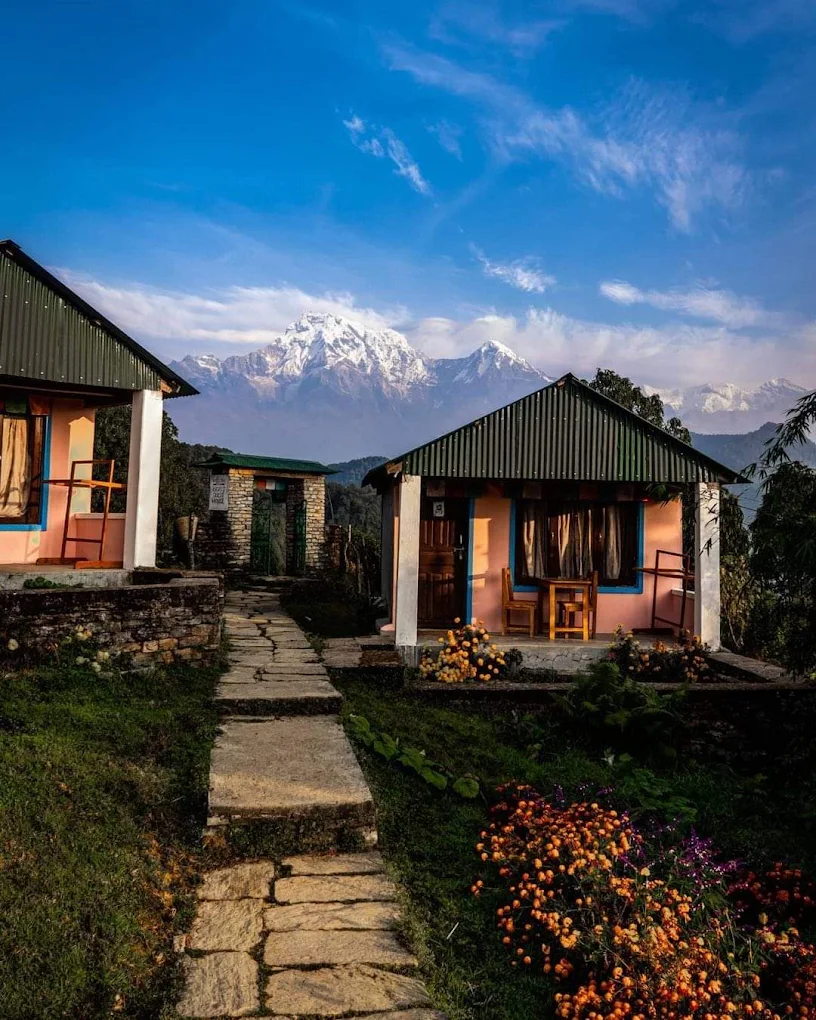
Detailed figures pending field verification
- Typical duration
- 2–3 days
- Difficulty
- Accessible
- Maximum altitude
- 2,517 m
- Starting point
- Kande or Bhadaure
- Finishing point
- Pokhara
- Best seasons
- March–May, October–November
- Accommodation
- Homestays and teahouses
- Guide considerations
- Not required on the usual route
Route overview
Panchase rises in the hills southwest of Pokhara. The name refers to the hilltop where views open toward several Himalayan ranges at once. Trekkers usually drive a short way out of the city, then walk through villages and forest to a pass below the peak, and climb the last steps for sunrise.
Common starts include Kande, on the road from Pokhara toward Baglung, and Bhadaure. The walk then reaches Panchase Bhanjyang, the usual overnight, before the peak. The way down often uses a different valley, toward Bhumdi or the lakeside, so you do not simply reverse the climb.
The usual line stays outside the Annapurna Conservation Area. That is the practical difference from Ghorepani / Poon Hill: no area permit on the hill itself, fewer trekkers, and a lower top.
A checked route description with villages, walking times, and the current trail from Kande and Bhadaure will be added after field verification.
Itinerary structure
Two or three days is the usual plan. One night at the pass is enough for sunrise on the peak and a walk out the next day. Three days lets you start lower, or finish by the lake instead of rushing the descent.
A single day from Pokhara can reach the hill and return, but you give up the sunrise and you make a very long day. Save that for a local outing, not for the view people come for.
Suggested two-day and three-day itineraries, with start and finish villages, will be added once verified with local hosts.
Difficulty
Panchase is accessible. The peak is low for the Annapurna region, the days are short, and the trail is forest and village paths rather than a high pass. You still climb steadily, often on stone steps, and a wet forest path can be slippery.
It is a fair first walk from Pokhara. It is not training for Thorong La.
Daily distances, step sections, and what fitness the sunrise morning actually takes, pending verification.
Altitude
The peak sits at about 2,517 m. Most people sleep lower, around the pass, and climb to the top before breakfast. That profile does not ask for rest days or acclimatization in the way ABC or the Circuit do.
See Altitude and acclimatization if Panchase is only the start of a higher trek.
Sleeping elevations for Bhadaure, the pass, and the peak, pending field verification.
Best time
Spring and autumn are the clear seasons, and spring is when the rhododendron forest on this hill is at its best. Winter is more realistic here than on the high routes, because the peak is low, though mornings are cold and views depend on the weather. Monsoon greens the forest and hides the ranges.
Season notes for forest conditions, sunrise cloud, and homestay opening pending field verification.
Accommodation
Expect village homestays and simple teahouses, not the lodge strip of Ghorepani. Rooms are basic. The pass has fewer beds than a Poon Hill night, so in peak season it is worth knowing where you will sleep.
Where homestays replace teahouses, and what to expect at the pass, pending verification.
Food
Dal bhat and a short home menu are the norm. Choice is smaller than on the main teahouse circuits. Eat what the house is cooking.
Route-specific food notes pending verification.
Costs
Panchase is one of the less expensive Annapurna walks: few days, no conservation-area permit on the usual route, and a short drive from Pokhara. A guide or porter is extra if you hire one. Daily rates are village rates, not high-camp rates.
A simple cost range for two-day and three-day trips pending verification.
Permits
The usual Panchase route does not enter the Annapurna Conservation Area, so the ACAP permit required for Poon Hill, ABC, and the Circuit is not part of this walk. Trails that continue north into that area, including links toward Australian Camp or Mardi Himal, do need it. Check the boundary against the line you will walk, not against the name of the trek.
See Annapurna trekking permits.
A current note on where the conservation-area boundary sits relative to the usual Panchase paths, pending verification.
Guide considerations
There is no checkpoint on the usual hill route, and a guide is not required to walk it. A local host is still useful if you want the shrine, the forest paths, and a bed sorted in advance. The licensed-guide rule for Annapurna protected areas applies if your route crosses into that area.
See Do you need a guide? and How to choose a trekking guide.
Transport
Trailheads are a short drive or local bus from Pokhara lakeside. Kande and Bhadaure are the usual drops. The finish is often a different village, with a bus or taxi back to the city, or a walk down toward Phewa Lake.
Journey times and typical fares from lakeside to Kande, Bhadaure, and Bhumdi pending verification.
Packing considerations
Pack for a short forest walk: rain protection, broken-in shoes, and a warm layer for sunrise. You need less cold-weather gear than on Poon Hill, and far less than on a high trek. A light bag is enough for two nights.
Common mistakes
People sometimes expect Poon Hill’s lodges and crowds, then find a quieter village walk. Others try to do the peak and the return as one rushed day and miss sunrise. Another mistake is assuming the conservation-area permit rules do not change if you add Australian Camp or Mardi Himal onto the end.
First-hand common mistakes from local hosts pending collection during field research.
Alternatives
If this route does not fit your time, fitness, or interests, consider these other Annapurna treks.
Ghorepani / Poon Hill
The better-known foothill circuit: higher, busier, and inside the conservation area.
Khopra Danda
A longer ridge with closer Dhaulagiri and Annapurna views, if you have about a week.
Mardi Himal
A higher ridge east of Pokhara, if Panchase feels too short and you want real altitude.
FAQ
How many days do I need for Panchase?
Most people take two or three days from Pokhara, including a night below the peak and a sunrise walk to the top. A long day hike is possible, but it makes a poor sunrise plan.
Do I need a permit for Panchase?
The usual hill route, through places such as Bhadaure and Panchase Bhanjyang, sits outside the Annapurna Conservation Area and does not need that area permit. If you continue into the conservation area, toward Australian Camp or Mardi Himal, a permit applies. Confirm the line you will actually walk.
How does Panchase compare with Poon Hill?
Both are short foothill walks with wide mountain views. Poon Hill is higher, more famous, and busier, and it sits inside the conservation area. Panchase is lower, closer to Pokhara, and generally quieter.
Is Panchase high enough to worry about altitude?
The peak is about 2,517 m, well below Poon Hill and far below the sanctuary or the high passes. Altitude illness is uncommon here. The walk is still a real climb through forest.
Can I combine Panchase with another trek?
Some people walk it as a warm-up before Poon Hill, Khopra Danda, or Mardi Himal. Linking it into the conservation area changes the permit. Do not treat it as acclimatization for Thorong La or Tilicho.
Planning the Panchase trek with a guide?
Tell us about your dates, experience, and preferences: we will help you find a suitable local guide through our network.
Request a Guide